Your Curated Asia Adventure Awaits...

Best Small Towns in China Cultural Icons to Hidden Gems
Discover China’s best small towns—hidden gems and cultural icons offering refined comfort, authentic traditions, and adventure beyond the country’s mega-cities.
ADVENTURE
2/10/20265 min read
Share │
You can explore China slowly and authentically in its small towns — places where adventure meets tradition, yet reliable amenities, quality stays, and modern connections remain within reach.
What if your first—or next—trip to China wasn’t about navigating mega-cities and touristy traps, but about discovering refined comfort, real culture, and adventure in places most travellers never reach?
The answer lies in China’s small towns. These destinations sit beyond the international spotlight yet remain deeply connected to China’s history, ethnic diversity, and landscapes. Some were once powerful trading centres, others spiritual or agricultural hubs. Today, they offer a rare balance of heritage, adventure, local cuisine, modern comforts, and carefully curated luxury.
Below are seven best small towns in China—both celebrated and quietly extraordinary—that answer the real questions discerning travellers ask before committing to a journey this bold.
1. Lijiang Old Town (Yunnan Province)
Ancient waterways, mountain air, and living minority culture
Lijiang dates back over 800 years, flourishing as a vital stop along the Ancient Tea Horse Road. It was shaped by the Naxi people, whose matriarchal traditions, pictographic Dongba script, and spiritual connection to nature still influence daily life. Unlike many ancient towns, Lijiang remains lived-in, not staged.
What to expect
Stone lanes, flowing canals, and snow-capped mountain backdrops
A relaxed yet sophisticated atmosphere
A strong creative and musical culture rooted in Naxi heritage
Accommodation
High-end: Heritage boutique hotels with heated floors, spas, and private courtyards
Authentic: Naxi-style guesthouses offering personal host interactions
Adventure & experiences
Hiking and cable-car access to Jade Dragon Snow Mountain
Countryside cycling along old caravan routes
Traditional music performances and calligraphy workshops
Connectivity & amenities
Reliable high-speed Wi-Fi
English-speaking guides
Upscale cafés, wine bars, and wellness studios
Must-try local dish
Naxi hotpot, infused with wild Yunnan herbs
2. Pingyao Ancient City (Shanxi Province)
A perfectly preserved merchant city behind Ming walls
Founded over 2,700 years ago, Pingyao rose to prominence during the Ming and Qing dynasties as China’s financial capital, home to the country’s earliest banks. Its complete city walls and courtyard homes make it one of the most intact historical towns in Asia.
What to expect
Deep immersion into imperial-era China
A calm, atmospheric feel after daylight crowds leave
Strong storytelling through architecture (2,700-year-old temple and 72 watchtowers)
Accommodation
High-end: Restored merchant mansions with discreet luxury
Authentic: Traditional brick inns with modern bathrooms
Adventure & experiences
Cycling atop ancient city walls
Exploring underground banking vaults
Guided historical walks at dawn or dusk
Connectivity & amenities
Stable Wi-Fi in most hotels
Cultural shows and refined dining within the walls
Must-try local dish
Pingyao beef, slow-cooked using century-old techniques
3. Dali Old Town (Yunnan Province)
Mountain freedom meets ancient kingdom roots
Dali was once the capital of the Nanzhao and Dali Kingdoms (8th–13th centuries). Framed by mountains and lake, it has long attracted scholars, traders, and spiritual seekers. Today, it blends history with a gentle, open-minded atmosphere.
What to expect
Bai minority architecture and customs
Stunning natural scenery
A slower pace ideal for longer stays
Accommodation
High-end: Lake-view boutique resorts
Authentic: White-walled Bai courtyard guesthouses
Adventure & experiences
Hiking the Cangshan Mountains
Cycling Erhai Lake
Cultural craft workshops
Connectivity & amenities
Excellent Wi-Fi
Wellness retreats and cafés
Easy onward travel options
Must-try local dish
Grilled Dali fish, marinated with chilli and mint
4. Furong Ancient Town (Hunan Province)
A cliffside town shaped by water and resilience
Furong has existed for over 2,000 years, inhabited primarily by the Tujia ethnic group. Built directly into cliffs above cascading waterfalls, it survived isolation and political shifts largely untouched, preserving its wooden stilt architecture.
What to expect
Dramatic scenery
A sense of discovery
Strong minority cultural presence
Accommodation
High-end: Boutique lodges with waterfall views
Authentic: Family-run stilt houses
Adventure & experiences
Waterfall hikes
Night photography
Cultural storytelling with Tujia hosts
Connectivity & amenities
Reliable Wi-Fi in lodges
Limited nightlife—ideal for immersive travel
Must-try local dish
Tujia smoked pork with chilli
5. Wuzhen (Zhejiang Province)
Polished elegance in a living water town
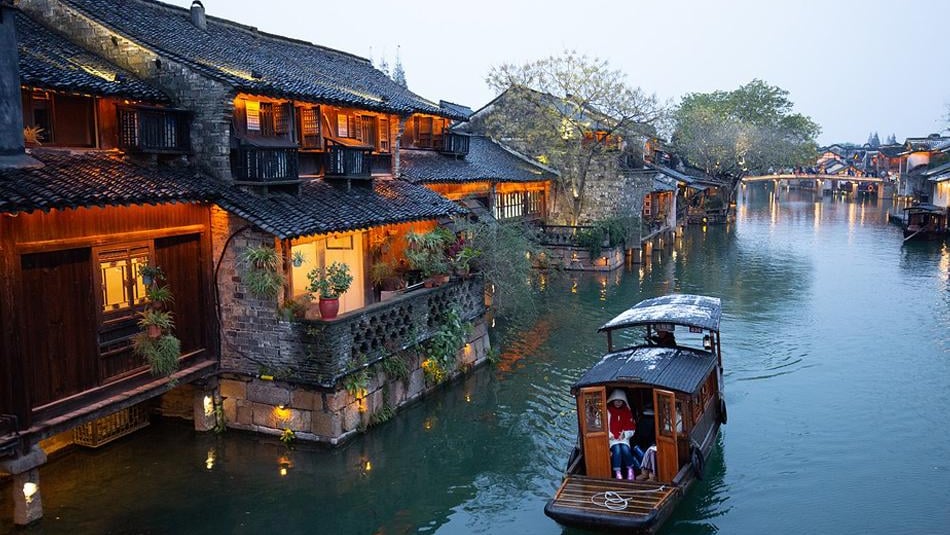
With over 1,300 years of history, Wuzhen from the Qing dynasty, was once a silk and rice trading hub. Carefully preserved, it showcases Jiangnan water-town life while offering some of the best-managed tourism infrastructure in China.
What to expect
Scenic canals, stone bridges and wooden architecture
Curated yet authentic experiences
Refined cultural programming
Accommodation
High-end: Luxury canal-side resorts inside scenic zones
Authentic: Traditional inns overlooking waterways
Adventure & experiences
Kayaking canals
Early-morning photography walks
Cultural workshops
Connectivity & amenities
Excellent Wi-Fi
English signage
Gourmet dining
Must-try local dish
Dongpo pork belly, rich and delicately sweet
6. Huangling Village (Jiangxi Province)
Terraced living history in the mountains
Founded during the Ming Dynasty, Huangling a colourful tea town, is famous for 晒秋 (sun-drying crops), a centuries-old farming practice that turns rooftops into living art. Its remote mountain location preserved its traditions.
What to expect
Seasonal colour changes
Elevated viewpoints
Rural authenticity without discomfort
Accommodation
High-end: Scenic mountain lodges
Authentic: Farm-style guesthouses
Adventure & experiences
Mountain hikes
Cable car access
Cultural photography
Connectivity & amenities
Wi-Fi in lodges
Well-organised visitor facilities
Must-try local dish
Jiangxi cured meats
7. Tachuan Village (Anhui Province)
A scholar village wrapped in autumn colour
Tachuan emerged during the Song Dynasty, shaped by Confucian values and Hui merchant wealth. Known for its maple forests, it becomes one of China’s most breathtaking autumn landscapes.
What to expect
Quiet reflection
Classical Hui architecture
A strong sense of place
Accommodation
High-end: Heritage lodges nearby
Authentic: Village homestays
Adventure & experiences
Forest trekking
Cultural interpretation walks
Seasonal photography tours
Connectivity & amenities
Limited but reliable Wi-Fi
Ideal for mindful travel
Must-try local dish
Stewed bamboo shoots with pork
Best Season to Visit China Towns
The most enjoyable times to explore China towns are during Spring and Autumn. These seasons bring mild, comfortable weather, perfect for sightseeing and outdoor activities.
Spring (April–May): Visitors can enjoy pleasant temperatures and vibrant blossoms.
Autumn (September–October): Autumn offers cooler air and stunning scenery.
June and November: Fewer crowds, excellent options, providing a more relaxed experience compared to the busy summer and peak autumn months.
FREQUENTLY ASKED QUESTIONS
Q: Are China’s inner towns suitable for first-time visitors who want comfort and safety?
A: Yes. Many inner towns now offer boutique luxury accommodation, English-speaking guides, strong infrastructure, and reliable Wi-Fi while remaining culturally authentic and less overwhelming than major cities.
Q: How do inner towns compare to major Chinese cities for high-end travellers?
A: China small towns provide deeper cultural immersion, calmer pacing, and more personalised experiences, while still offering refined accommodation and curated services preferred by luxury adventure travellers.
Q: Can travellers balance digital connectivity with remote cultural experiences in China?
A: Absolutely. Most inner towns featured offer reliable Wi-Fi in hotels and cafés, allowing travellers to stay connected while enjoying remote landscapes and slower travel rhythms.
Q: What type of adventure activities are available in China’s inner towns?
A: Activities range from mountain hiking, cycling ancient trade routes, cultural workshops, kayaking canals, and minority-led experiences that combine physical activity with cultural insight.
Q: Is local food safe and accessible for international travellers in small Chinese towns?
A: Yes. Local cuisine is a highlight of small-town travel, with clean, well-regulated dining options in hotels and respected local eateries catering to visitors.
Q. Are China rural towns easy to reach?
A. Yes. Most towns are easy to reach via high-speed rail that connects to major cities and remote areas, then connecting to private transfers or any other transportation option.
Q. Can I pair any of the towns together for a day itinerary?
A. If you want a comfortable one-day sightseeing plan, pair Lijiang and Dali. They are both located in Yunnan province, relatively close to each other, and each offers a compact set of highlights that can be enjoyed without rushing.
Beyond the villages, discover China’s most exclusive and lesser-known Great Wall trekking experience.
Want more authentic countryside charm? Explore Japan Best Small Towns in Japan Hidden Villages and Cultural Icons
Planning your journey? Don’t miss our essential apps guide to navigating China seamlessly.
China small towns Rural towns in China Best small towns in China Traditional Chinese Villages
Cultural travel China China rural towns Best old towns China Remote Chinese villages Beautiful viilages in China
Small towns in China Small ciites in China China countryside