Your Curated Asia Adventure Awaits...

Japan's Mystical Glowing and Geological Caves
Journey into Japan’s mystical glowing caves—volcanic wonders sculpted by rainfall, revealing geological marvels and ecological treasures in an enchanting underground world.
CAVING
1/22/20265 min read
Share │
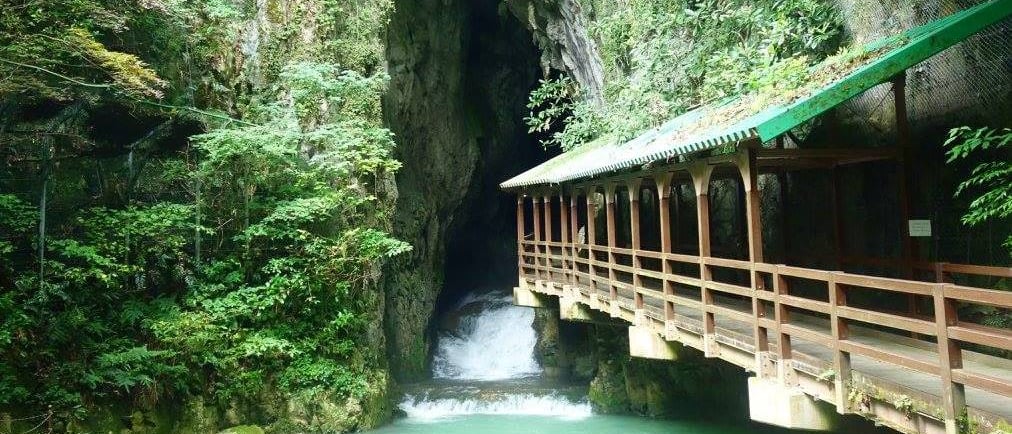
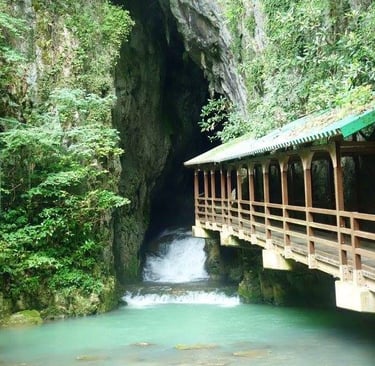
This island nation, forged by volcanic fire and sculpted by millennia of rainfall, holds a constellation of caves that are profound geological and ecological treasures. From the emerald glow of rare moss to the chilling permanence of lava ice, these caverns offer an immersive journey into the Earth's very core. This exploration guides the discerning adventurer traveller through Japan's most spectacular underground systems, focusing on their unique features, best visiting times, and essential travel logistics.
I. The Luminous Wonders
The concept of a "glowing cave" often refers to two distinct, yet equally spectacular, phenomena: the rare biological light of moss and the sophisticated illumination of vast limestone halls.
A. The Ethereal Emerald - Yoshimi Hyakuana and Hikarigoke
The Yoshimi Hyakuana (Hundred Caves) in Saitama Prefecture, an accessible destination from Tokyo in the Kanto region, presents a unique blend of history and natural luminescence. These 219 ancient tunnel tombs (kofun) from the Tumulus period house a protected natural monument: Hikarigoke, or luminous moss (Schistostega pennata).
Unique Feature: This tiny moss is not truly bioluminescent but rather possesses specialized cells that gather the faint natural light in the deep shade and reflect it like tiny lenses, creating a soft, greenish-gold shimmer. It is a fragile, sensitive ecosystem that thrives in the caves’ humidity and low light.
Best Time to Visit: The caves maintain a year-round cool temperature, making a visit comfortable at any time. However, a trip in early spring allows travelers to witness the vibrant cherry blossoms above ground before descending to the glowing subterranean world below.
B. The Deep Blue Abyss - Ryusendo Cave
Located in Iwate Prefecture in the rugged Tohoku region, Ryusendo Cave is regarded as one of Japan's three greatest limestone caverns. Here, the glow is that of water—a mesmerizing, deep, dragon-blue that has captivated explorers for generations.
Unique Feature: The cave is famous for its crystal-clear underground lakes, with one reaching a recorded depth of 98 meters, making it one of the deepest in Japan. Submerged lighting accentuates the extraordinary clarity of the water, creating an ethereal blue reflection that gives the pools a mysterious, glowing quality.
Best Time to Visit: The internal temperature remains consistent (around 10°C to 15 °C) throughout the year, but the surrounding landscape of Iwate is best explored from late spring to early autumn for comfortable above-ground trekking.
C. The Stage-Lit Subterranean Hall - Abukuma-do Cave
A masterpiece of geological artistry in Fukushima Prefecture, Abukuma-do Cave offers a different kind of glow—that of human design enhancing natural splendor. Formed over 80 million years, this cave is a testament to the power of water and time.
Unique Feature: The cavern is famous for its intricate formations, including the massive "Christmas Tree" stalagmite (reportedly the largest in Asia) and the delicate "Crystal Curtain." The vast chamber known as "The Moon World" utilizes a sophisticated stage-lighting system to create a dramatic, atmospheric glow that changes and highlights the mineral architecture within. An optional exploration course offers an adventurous detour, requiring visitors to crawl through narrow passages.
Best Time to Visit: Open year-round, the constant, mild internal temperature of about 15 °C makes it a popular retreat from the hot summer humidity or the chill of winter.
II. Fire and Ice Caverns of Fuji
Near the base of the iconic Mount Fuji in the Yamanashi Prefecture, a collection of caves formed by ancient lava flows from the volcano provides a contrasting, non-limestone caving experience, where the "glow" is the reflection of light off permanent ice.
A. Fugaku Wind Cave and Narusawa Ice Cave
These two adjacent caves, located in the Aokigahara Forest, near Mt. Fuji, are lava tubes that dramatically illustrate the volcanic history of the region.
Unique Features: The Fugaku Wind Cave is a naturally cooled chamber where air currents constantly flow, giving it its name. Historically, it was used as a natural refrigerator to store silkworm eggs. The Narusawa Ice Cave, conversely, maintains a zero-degree Celsius environment year-round, featuring stunning, permanent ice pillars and icicles (they are at their biggest in April), that reflect light with an icy sparkle. If you plan to see both the Wind Cave and the Ice Cave, it is recommended to walk the 30-minute distance using the well-maintained natural footpath.
Best Time to Visit: A visit during summer offers the most stark and memorable contrast, providing a chilling respite from the heat above ground and emphasizing the surreal experience of standing beside ice formations in Japan’s humid season.
III. Giants and the Niche Wonders
Japan’s cave network extends far beyond the most famous glowing or icy locales, offering vast and specialized underground tourism for every type of traveller.
A. Japan's Largest: Akiyoshido Cave
Situated in Yamaguchi Prefecture on Honshu's western tip, Akiyoshido Cave is Japan’s largest and longest known limestone cave. It lies beneath the massive Akiyoshidai Karst Plateau, a designated Quasi-National Park.
Unique Feature: Only about one kilometer of its over nine-kilometer length is open to the public, yet this section features enormous halls and natural features of immense scale, such as the "Hyakumaizara" (100 Plates), a dramatic series of terraced, water-filled limestone pools, and powerful underground waterfalls. The constant 17 °C temperature allows for comfortable all-season exploration.
B. Sea Caves - Tottori Sand Dunes Conan Cave
While not an official "glowing cave," the Tottori Sand Dunes (Japan’s largest) in Tottori Prefecture feature small, mysterious sea caves carved by the ocean near the Uradome Coast. One such locale has gained colloquial fame as the Conan Cave due to its association with the famous Japanese manga and anime, Detective Conan.
Unique Feature: The caves here offer a unique geological blend of coastal erosion and dune formation, often explored via sea kayak, providing an adventurous, surface-level caving experience with stunning views of the coastal cliffs and highly transparent water.
Best Time to Visit: Late spring to early autumn is ideal for water activities like kayaking and exploring the sand dunes themselves.
C. Mystery of Nature - Cave Okinawa
Located in central Okinawa Prefecture, Cave Okinawa is a natural limestone cave located in Uruma. Surrounded by lush greenery, it offers a magical underground world filled with glittering stalactites and vibrant stone formations illuminated by colorful lighting. Beyond its natural beauty, the cave also carries cultural significance, having served historically as a shelter and now as a place where visitors can learn about Okinawa’s geological heritage.
Unique Feature: A dazzling display of stalactites in golden and glittering hues, enhanced by atmospheric lighting that transforms the cave into a mystical wonderland. Safe walkways make it accessible for everyone.
Best Time to Visit: Open year-round, but the cave is especially exciting in summer when its cool interior offers a refreshing escape from Okinawa’s subtropical heat. The lighting effects make every visit feel like stepping into a fantasy realm.
FREQUENTLY ASKED QUESTIONS
Q: Which of Japan's caves is the deepest and has the most famous underground lakes?
A: Ryusendo Cave, located in Iwate Prefecture, is famous for having some of the world’s clearest underground lakes, including the deepest in Japan (120 meters, though not publicly accessible). Visitors can tour three of its stunning, deep-blue illuminated lakes.
Q: Can travellers visit both an ice cave and a glowing moss cave on the same trip?
A: Yes, travellers can visit both. The Narusawa Ice Cave (Fuji region, Yamanashi) and the Yoshimi Hyakuana glowing moss cave (Saitama) are both located in the Kanto and Chubu regions of Honshu and can be incorporated into a multi-day itinerary focused on geological diversity.
Q: What is the main highlight of Akiyoshido Cave, and where is it located?
A: Akiyoshido Cave, located in Yamaguchi Prefecture, is a Special Natural Monument and Japan's largest cave. Its main highlight is the sheer scale and the incredible formations like the "Hyakumaizara" (100 Plates) and huge stalagmites, with a stable 17 C temperature for comfortable year-round exploration.
Q: What unique feature does the Abukuma-do Cave in Fukushima offer for adventurous visitors?
A: Abukuma-do Cave features an optional, 120-meter Exploration Course that splits off the main path, requiring visitors to navigate narrow passages, ladders, and natural obstacles, offering a more challenging and immersive spelunking experience.
If underground adventures excite you, don’t miss Japan’s spring whitewater rafting season and Luxury Canyoning and Caving Expedition in Dalat, Vietnam